Science education in Morocco is undergoing a major transformation driven by digital innovation, curriculum reforms, and increasing investment in research and higher education. As global scientific standards evolve, Morocco is working to modernize its education system to prepare students for careers in artificial intelligence, biotechnology, engineering, and environmental science. Universities, schools, and research institutions are increasingly aligning with international frameworks to strengthen scientific literacy and innovation capacity.
Recent reforms and investments, including expanded university funding and new academic programs, show a clear national commitment to improving science education quality and accessibility. Mohammed VI Polytechnic University and other leading institutions are playing a central role in shaping this future-oriented academic landscape.
Table of Contents
Overview
| Aspect | Details |
|---|---|
| Focus Area | Science education future trends |
| Country | Morocco |
| Key Fields | STEM, AI, biotech, engineering |
| Main Driver | Digital transformation & reform |
| Education Shift | Practical + research-based learning |
| Trend | Rapid modernization |
Digital Classrooms Growth
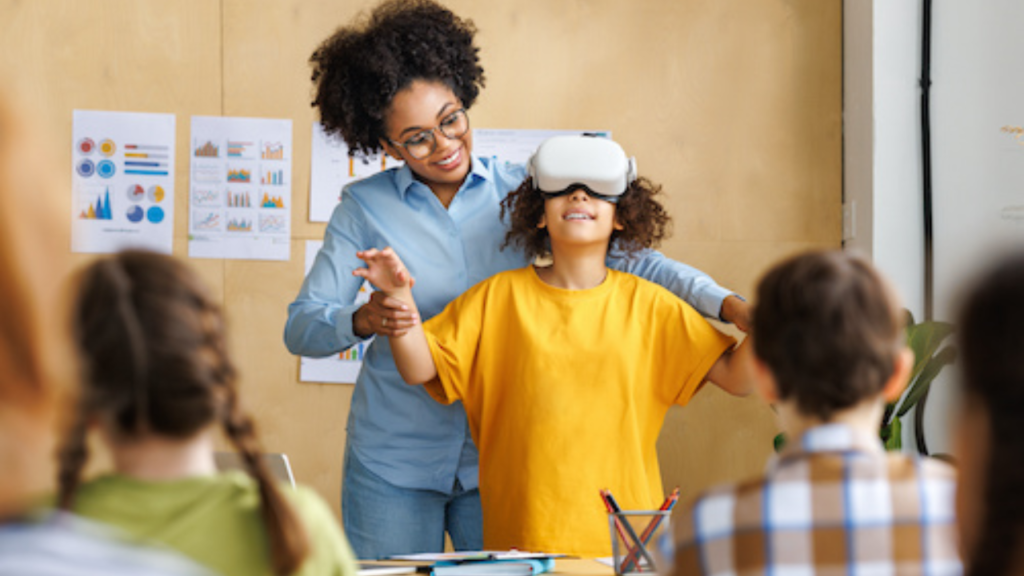
One of the strongest trends shaping science education in Morocco is the rapid integration of digital tools into classrooms. Schools and universities are increasingly adopting online platforms, simulations, and AI-assisted learning systems.
Key developments include:
- Use of virtual laboratories for science experiments
- AI-powered learning platforms for personalized education
- Increased use of tablets and digital textbooks
- Hybrid learning models combining online and offline teaching
Recent academic studies show that simulations and ICT tools are improving understanding of complex scientific concepts while overcoming resource limitations in schools.
STEM Education Expansion
STEM (Science, Technology, Engineering, Mathematics) education is expanding rapidly across Morocco as part of national development goals. The focus is shifting toward practical, problem-solving skills rather than memorization.
Key changes include:
- Introduction of STEM-focused curricula in schools
- Greater emphasis on coding, robotics, and data science
- Increased participation in science competitions and fairs
- Encouragement of project-based learning
Research shows that Morocco is producing a growing number of STEM graduates each year, supporting its expanding tech ecosystem.
University Reform and Innovation
Higher education institutions are undergoing structural reforms aimed at improving quality, access, and research output. These reforms are also aligning universities with global scientific standards.
Key developments include:
- Expansion of university programs in science and technology
- Creation of new faculties in medicine and engineering
- Improved student housing and infrastructure
- Stronger focus on research and innovation systems
Recent government initiatives have significantly increased higher education funding and expanded enrollment capacity across universities.
AI and Data Science Integration
Artificial intelligence and data science are becoming core parts of science education in Morocco. Universities are introducing specialized programs to meet growing industry demand.
Key trends include:
- AI-focused degrees and certifications
- Machine learning and data analytics courses
- Collaboration between universities and tech companies
- AI research labs in engineering schools
National digital strategies are also investing in AI training programs to create thousands of skilled graduates in this field.
Research-Based Learning Models
Science education is gradually shifting from theory-based learning to research-driven education. Students are now encouraged to participate in real scientific investigations early in their academic journey.
Key developments include:
- Student involvement in laboratory research
- Increased publication opportunities for students
- Collaboration between universities and research centers
- Focus on critical thinking and experimentation
This approach is helping students develop practical scientific skills and prepare for global research careers.
Teacher Training and Modern Methods
Teachers play a crucial role in shaping science education, and Morocco is investing in improving teacher training programs.
Key improvements include:
- STEM-focused teacher training programs
- Digital teaching skill development
- Use of interactive and multimedia tools
- Emphasis on inquiry-based learning methods
These improvements aim to make science teaching more engaging and effective.
Private Sector and Innovation Ecosystem
Private companies and innovation hubs are increasingly contributing to science education by supporting training programs and internships.
Key contributions include:
- Industry-sponsored training programs
- Internship opportunities in tech and engineering
- Startup incubators supporting student innovation
- Collaboration between universities and companies
This connection between education and industry helps bridge the skills gap in the job market.
Challenges in Science Education
Despite progress, several challenges still affect the development of science education in Morocco.
Key challenges include:
- Unequal access to quality education in rural areas
- Limited laboratory infrastructure in some schools
- Skills mismatch between graduates and the job market needs
- High dropout rates in higher education
These issues are being addressed through ongoing reforms and investment strategies.
Looking Ahead
The future of science education in Morocco is moving toward a more modern, digital, and research-oriented system. With strong investments in STEM education, university reform, and AI integration, the country is building a foundation for a skilled scientific workforce. Although challenges remain, continued innovation in teaching methods and infrastructure is positioning Morocco to become a stronger player in global science and technology education in the coming years.