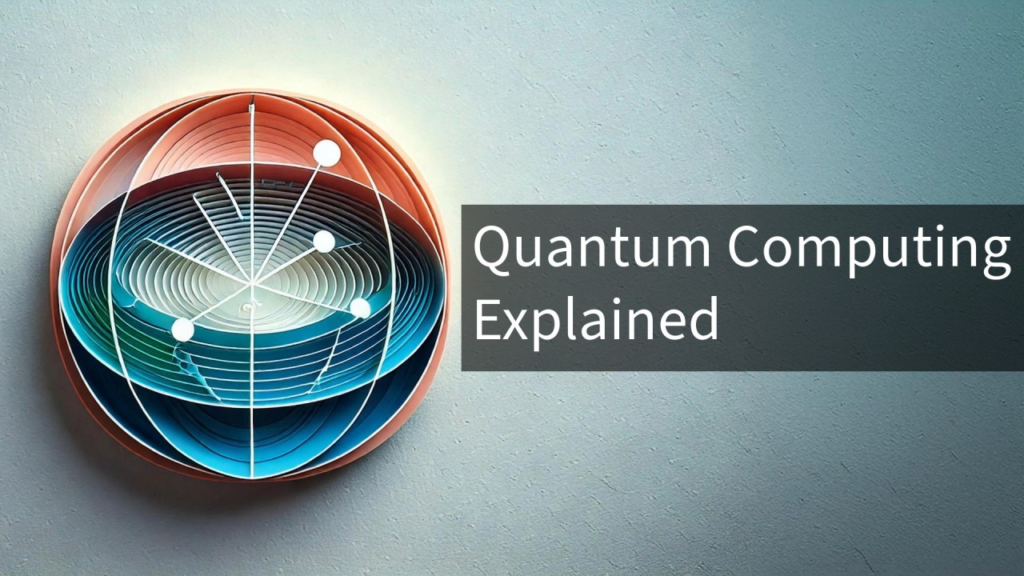
Quantum computing is one of the most exciting and rapidly developing fields in modern science. It has the potential to revolutionize industries such as healthcare, cybersecurity, and artificial intelligence. For students in Morocco, understanding quantum computing is becoming increasingly important as the country expands its focus on advanced technologies and scientific research. This article explains the basics, importance, and future relevance of quantum computing in a simple and structured way.
Table of Contents
Overview
| Aspect | Details |
|---|---|
| Field | Quantum computing |
| Key Concept | Qubits instead of bits |
| Main Advantage | High-speed complex problem solving |
| Applications | AI, cryptography, medicine |
| Difficulty Level | Advanced but learnable |
| Future Scope | High demand globally |
Basic Concept
Quantum computing is based on principles of quantum mechanics, a branch of physics that studies very small particles like atoms and electrons. Unlike classical computers that use bits (0 or 1), quantum computers use qubits.
Key features include:
- Qubits can be both 0 and 1 at the same time
- This property is called superposition
- Qubits can also be linked through entanglement
- These features allow massive parallel computation
Quantum computers can process complex problems much faster than traditional systems.
How It Works
Quantum computers operate using quantum states and probabilities rather than fixed values. This allows them to explore many possible solutions simultaneously.
Key working principles:
- Superposition allows multiple states at once
- Entanglement connects qubits for coordinated computation
- Quantum gates manipulate qubit states
- Measurement collapses the quantum state into a result
This unique working method enables powerful computational capabilities.
Why It Matters
Quantum computing has the potential to solve problems that are currently impossible for classical computers. It is especially useful for complex simulations and data analysis.
Important benefits include:
- Faster data processing
- Ability to solve complex scientific problems
- Improved optimization and decision-making
- Breakthroughs in research and innovation
For Moroccan students, learning this field opens doors to global opportunities.
Real Applications
Quantum computing is already being explored in multiple industries.
Key applications include:
- Drug discovery and medical research
- Cryptography and data security
- Artificial intelligence and machine learning
- Climate modeling and environmental science
These applications show how quantum computing can impact real-world problems.
Education Opportunities
Morocco is gradually expanding its focus on advanced scientific education. Students interested in quantum computing can start building relevant skills early.
Opportunities include:
- Studying physics, mathematics, or computer science
- Enrolling in online quantum computing courses
- Participating in research projects
- Joining tech communities and workshops
Universities are also beginning to introduce advanced technology programs.
Skills Required
To understand quantum computing, students need a combination of technical and analytical skills.
Important skills include:
- Strong mathematics (especially algebra and probability)
- Basic understanding of physics
- Programming knowledge (Python, Qiskit)
- Logical and problem-solving skills
Developing these skills can help students succeed in this field.
Challenges Ahead
Quantum computing is still in its early stages and comes with several challenges.
Key challenges include:
- High cost of technology
- Complex concepts and learning curve
- Limited access to quantum hardware
- Need for specialized training
Despite these challenges, the field is growing rapidly.
Global Importance
Quantum computing is a global priority, with countries investing heavily in research and development.
Global trends include:
- Major investments by tech companies
- International research collaborations
- Development of quantum algorithms
- Increasing demand for skilled professionals
Moroccan students can benefit by becoming part of this global movement.
Future Career
Quantum computing offers promising career opportunities for students willing to explore advanced technologies.
Career paths include:
- Quantum software developer
- Research scientist
- Data scientist with quantum expertise
- Cybersecurity specialist
These roles are expected to grow significantly in the coming years.
The Bottom Line
Quantum computing is a transformative technology that will shape the future of science and innovation. For students in Morocco, understanding its basics and developing relevant skills can open doors to exciting global opportunities. While the field is complex, early learning and continuous practice can make it accessible and rewarding.